Restoration project for marble architectural fragments from the Roman Forum area, testing of anti-graffiti products
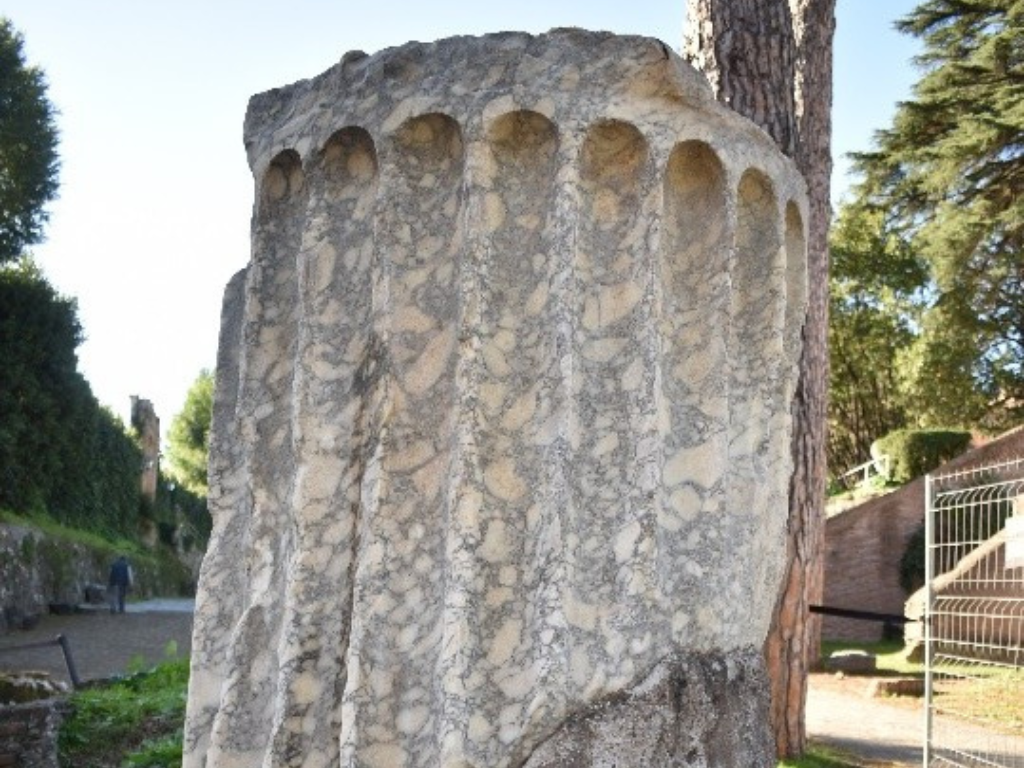
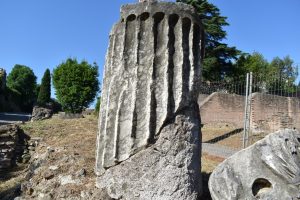
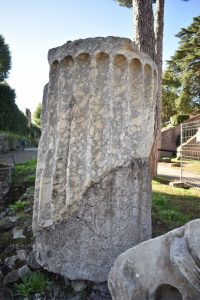
As part of the conservation activities promoted by the Parco archeologico del Colosseo, a joint study and restoration project has been developed focusing on several marble architectural fragments from the Roman Forum, which has been incorporated into a degree thesis at the Istituto Centrale per il Restauro (dott. ssa Simona Dichiara, Relatori: Luciana Festa ICR, Angelica Pujia PArCo, PFP1 – ANNO ACCADEMICO 2019/2020). The fragments consist of a fluted column in pavonazzetto marble and three fragments of a Corinthian capital in white marble, dating from between the 2nd and 3rd centuries AD.
These fragments, exposed to the open air and in direct contact with the ground, show signs of deterioration due to prolonged exposure to atmospheric agents. The surfaces were marked by biological patina, erosion and disintegration of the stone, fractures, flaking and gaps. In several areas, there were also black crusts due to atmospheric pollution.
The experimental diploma thesis consists of a preliminary phase of study and documentation, which includes geometric and photographic surveys, visual and diagnostic analyses of the constituent materials and degradation phenomena, as well as scientific laboratory investigations. The results of these investigations make it possible to define the characteristics of the materials and to develop a methodology for intervention that respects the principles of compatibility, reversibility and minimal intervention.
-
Restoration
The conservation work involves removing biological colonisation with selected biocides, followed by controlled cleaning of the surfaces. This operation is carried out using mechanical and chemical techniques, calibrated according to the state of conservation of the marble. Where necessary, areas affected by disintegration are consolidated with products capable of restoring the cohesion of the stone. The most significant gaps and fractures are filled with traditional mortars, formulated with lime and marble powder to ensure the stability and legibility of the artefacts.
-
-
Experimentation
A central aspect of the project is the experimentation with anti-graffiti protective treatments. Various products were evaluated through laboratory tests conducted on samples made with materials similar to the originals. The samples were subjected to simulations of vandalism and artificial ageing to verify their effectiveness, durability and compatibility with marble. This experimental phase made it possible to identify the most suitable treatment, which was then applied to the restored surfaces to prevent and limit damage from possible vandalism.
The project contributes to the conservation of these architectural fragments, but also to their enhancement, restoring their legibility and improving their enjoyment by the public. The intervention is part of the Colosseum Archaeological Park’s broader commitment to the protection of archaeological heritage through an integrated approach that combines research, experimentation and the application of the most up-to-date restoration methodologies, ensuring that these artefacts are passed on to future generations.