Environmental safety measures in room 64, Domus Aurea – 2025
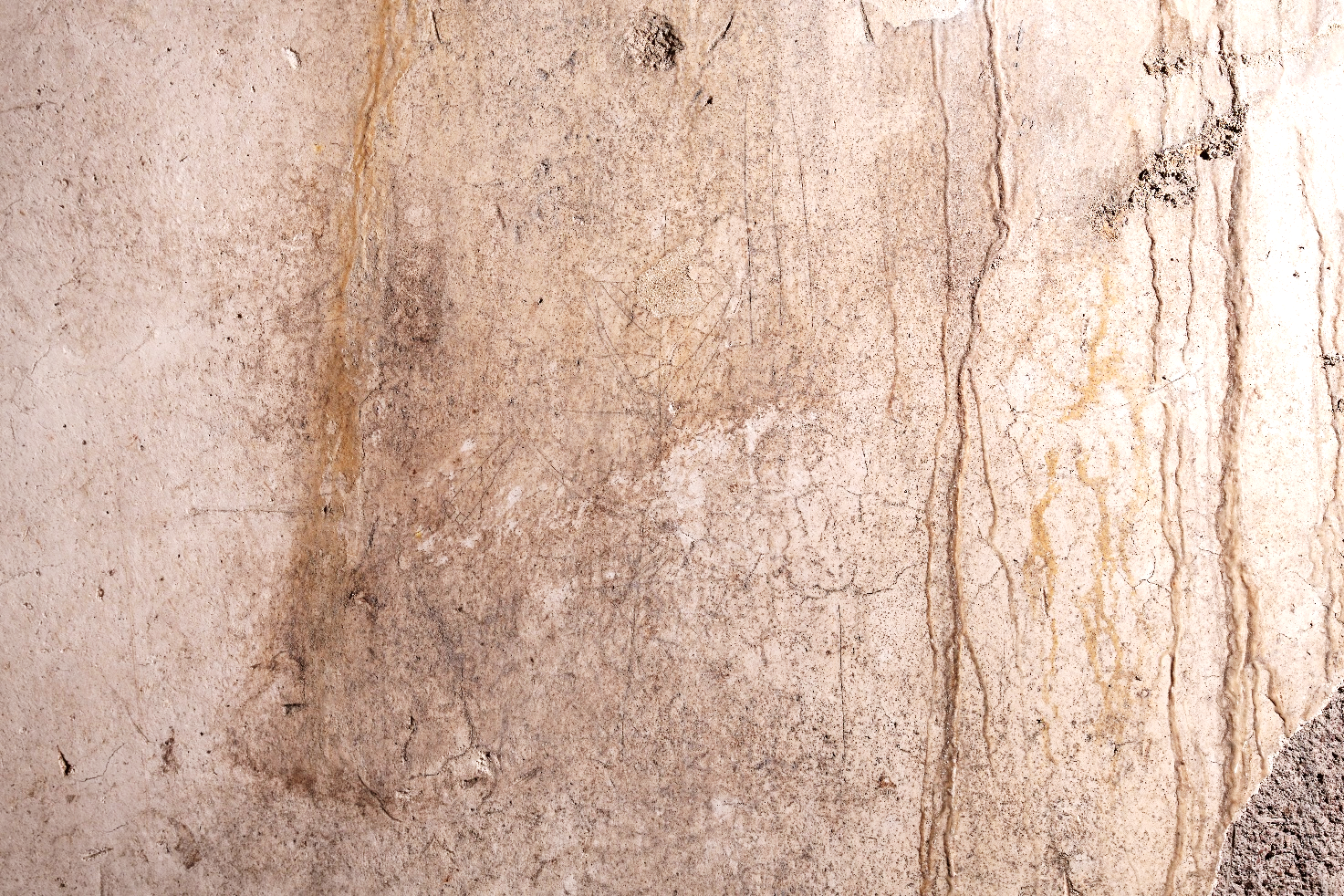
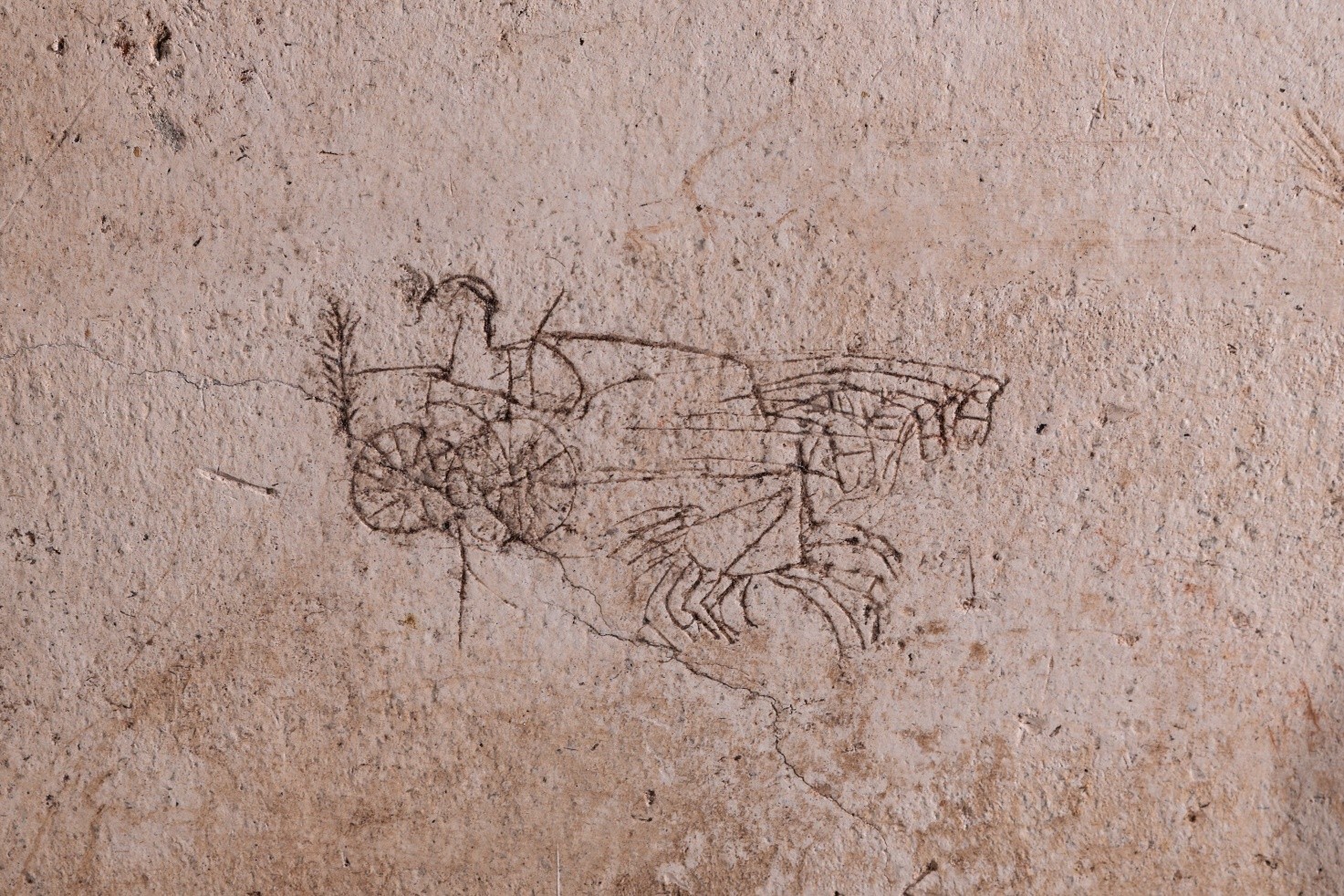
Room 64, overlooking the Pentagonal Courtyard and covered by a barrel vault, has white plastered walls that preserve numerous Roman-period graffiti up to about 2 m from the floor. These marks, mostly numbers, were likely used for accounting purposes, suggesting a later phase than the Neronian period and that the room served as a service area. Some incisions were made with a pointed stylus, and a few even with a bifurcated tip; only one shows traces of red paint.
-
State of conservation
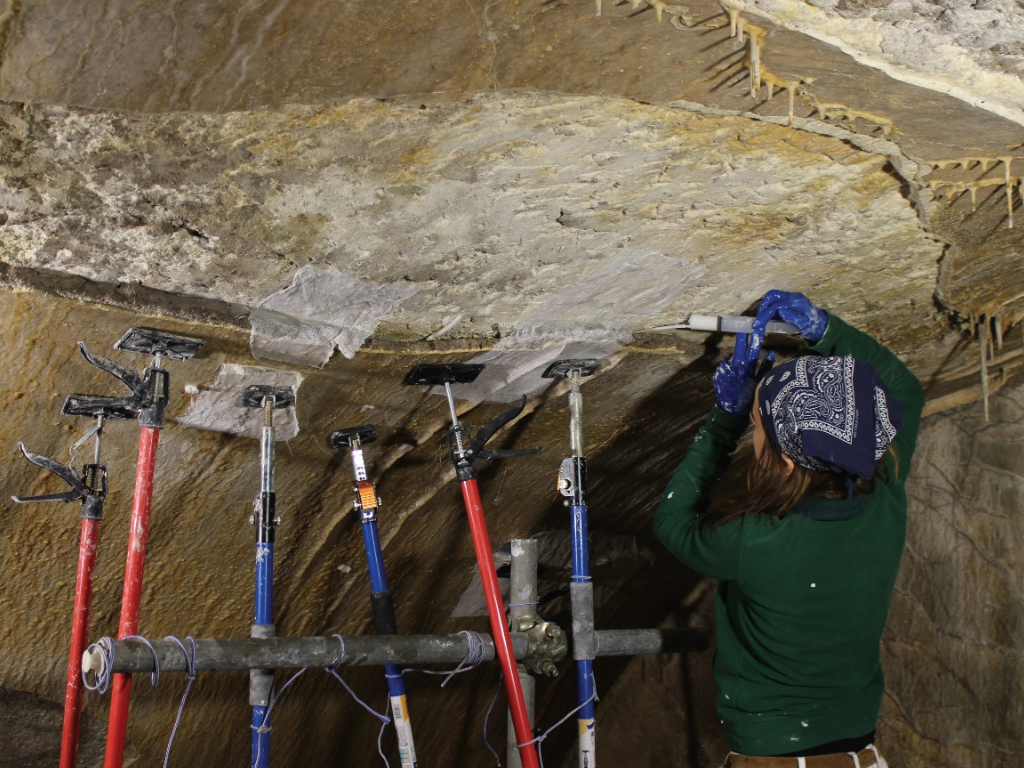
The room required urgent intervention as it had not yet undergone conservation work. Since the area is not yet protected by the Integrated Protection System (drainage, waterproofing, load reduction, and garden surface), the restoration focused on securing the surfaces, without removing thick calcareous deposits due to ongoing water percolation.
Water action was the main cause of deterioration, leaving calcareous deposits and flowstones in colors ranging from white to red and ochre, often obscuring the graffiti. Plaster layers had detached, cracked, or deformed, and soluble salts had weakened the layers, creating a risk of further loss.
-
Restoration work
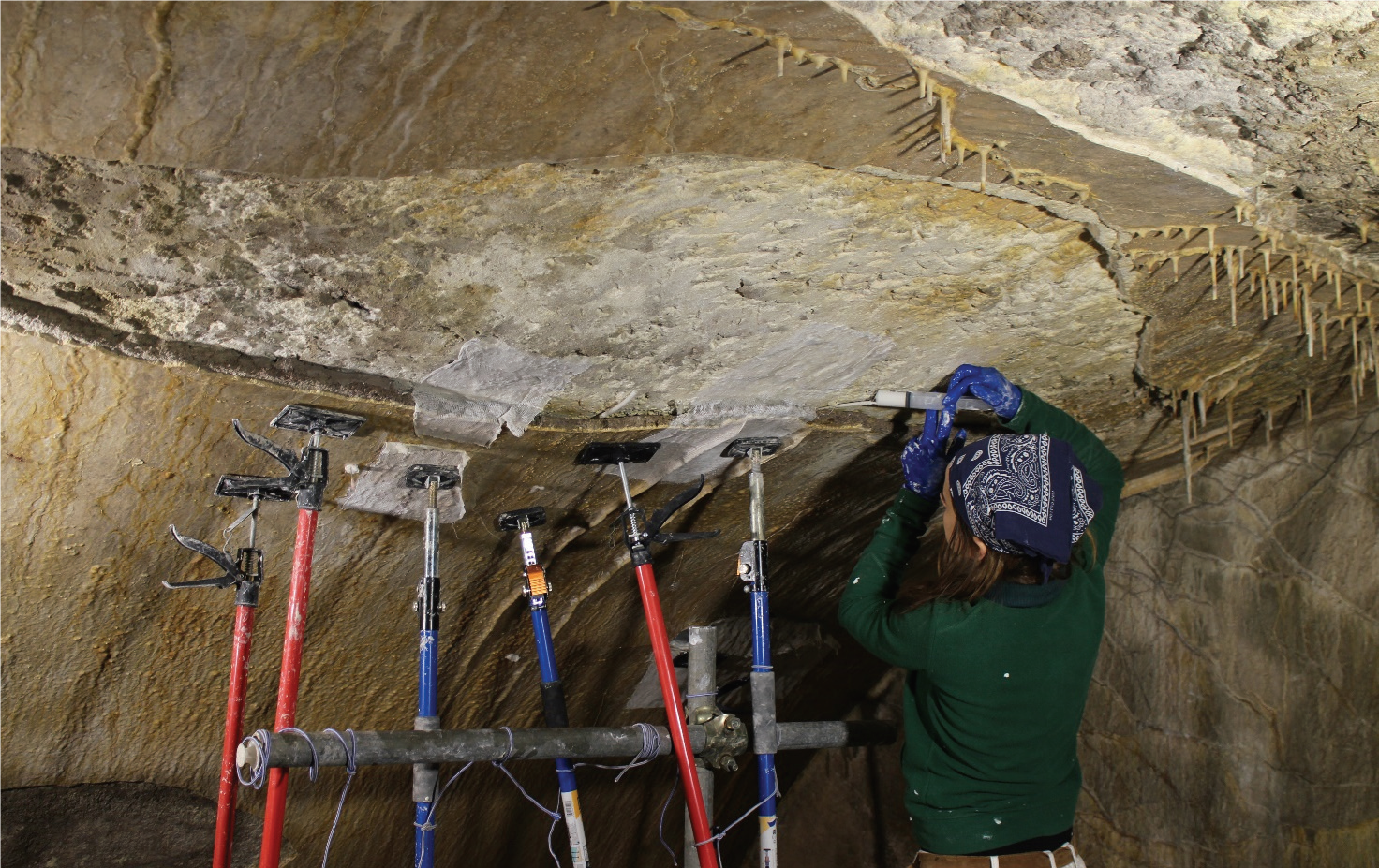
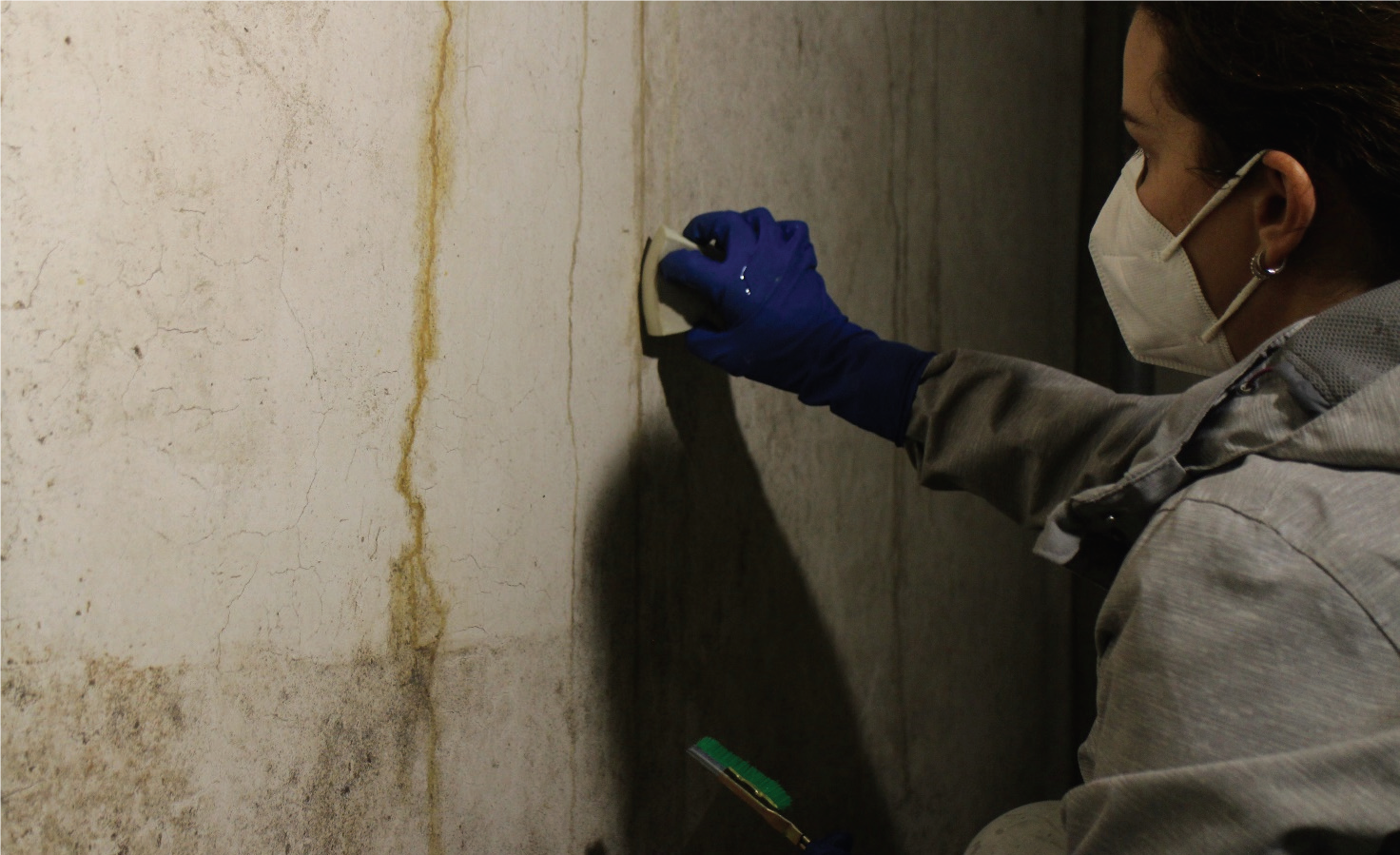
The restoration stabilized the surfaces and made the graffiti readable again. Concretions hiding the inscriptions were carefully removed, revealing, for example, previously unknown graffiti on the north wall depicting two sailing boats. Plaster and preparatory layers were consolidated using compatible mortars, and minor losses were filled with lime-based materials calibrated in color to blend with the historic surfaces. Fragile areas of the vault received micro-fills and light reinforcing washes.
The intervention successfully stabilized the room, improved legibility of the finishes and graffiti, and preserved historical traces while ensuring compatibility, reversibility, and minimal intervention pending the resolution of water infiltration.
-
Immagini