Restoration of the floor surfaces in Piazza del Colosseo
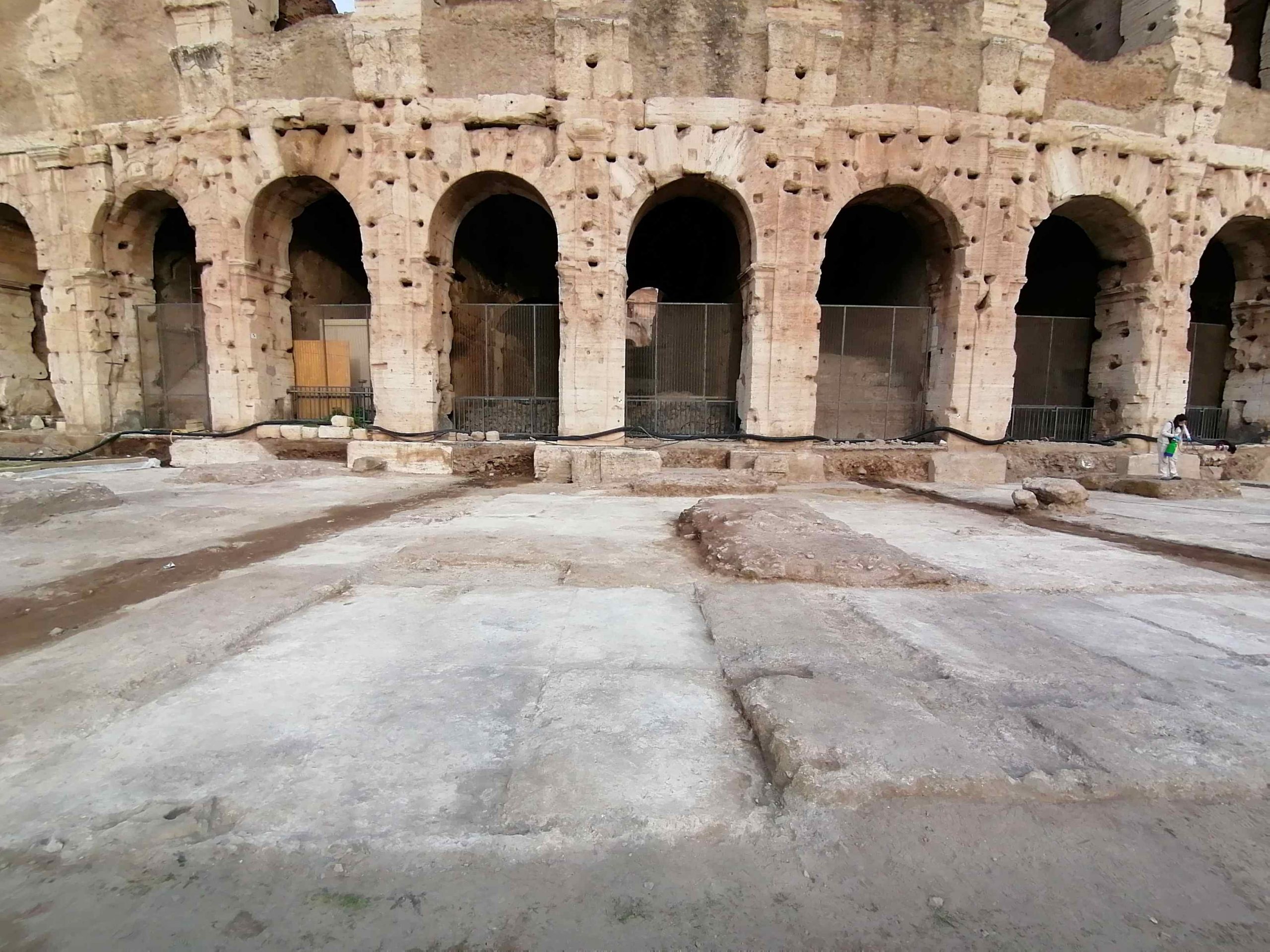
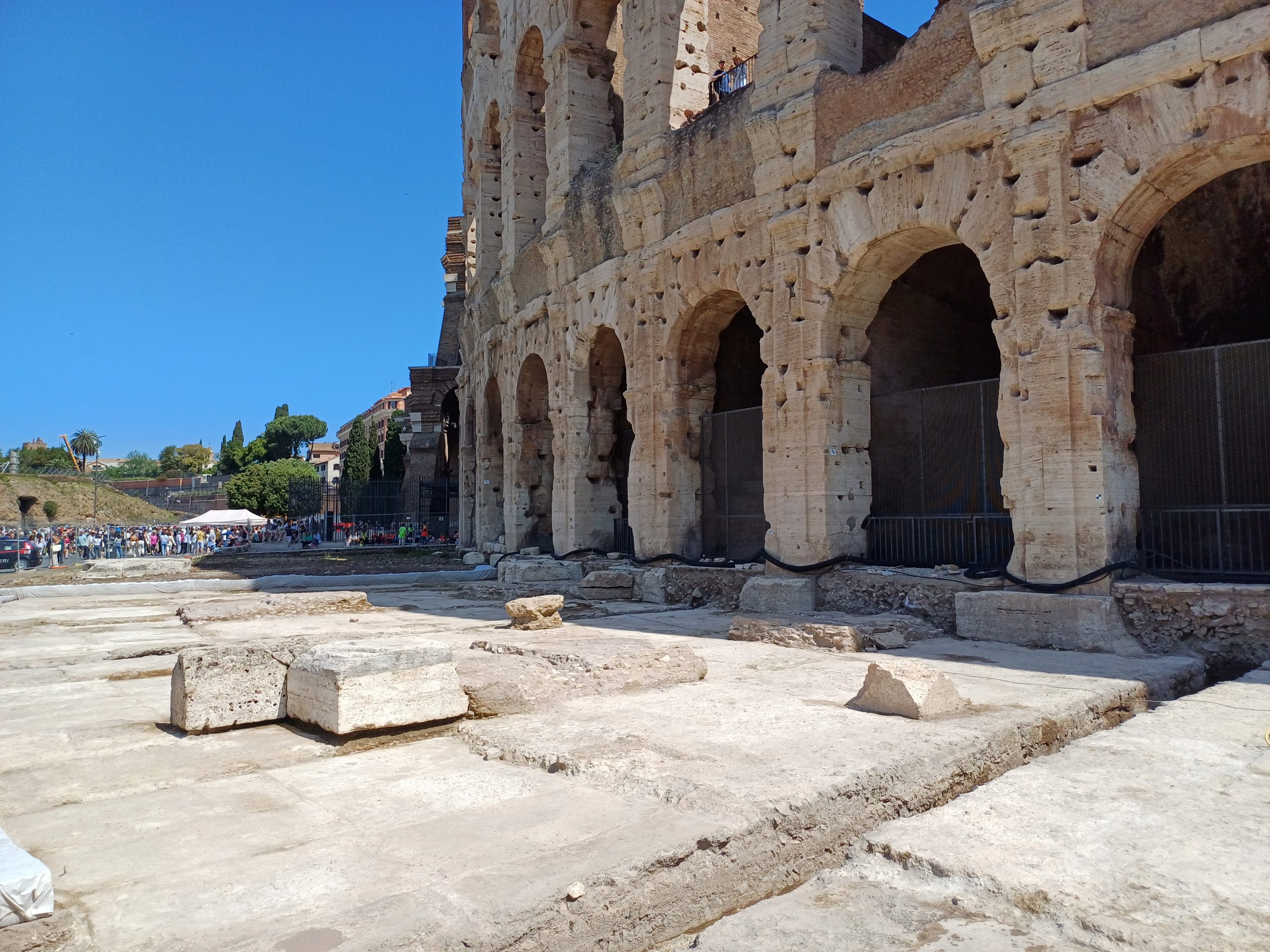
The restoration of the floor surfaces in the southern area of Piazza del Colosseo, corresponding to the monument’s two outermost passageways, which no longer survive, accompanied the archaeological investigations carried out in 2023. The aim was to preserve and make visible the remains of the ancient walking surface of the Flavian Amphitheatre.
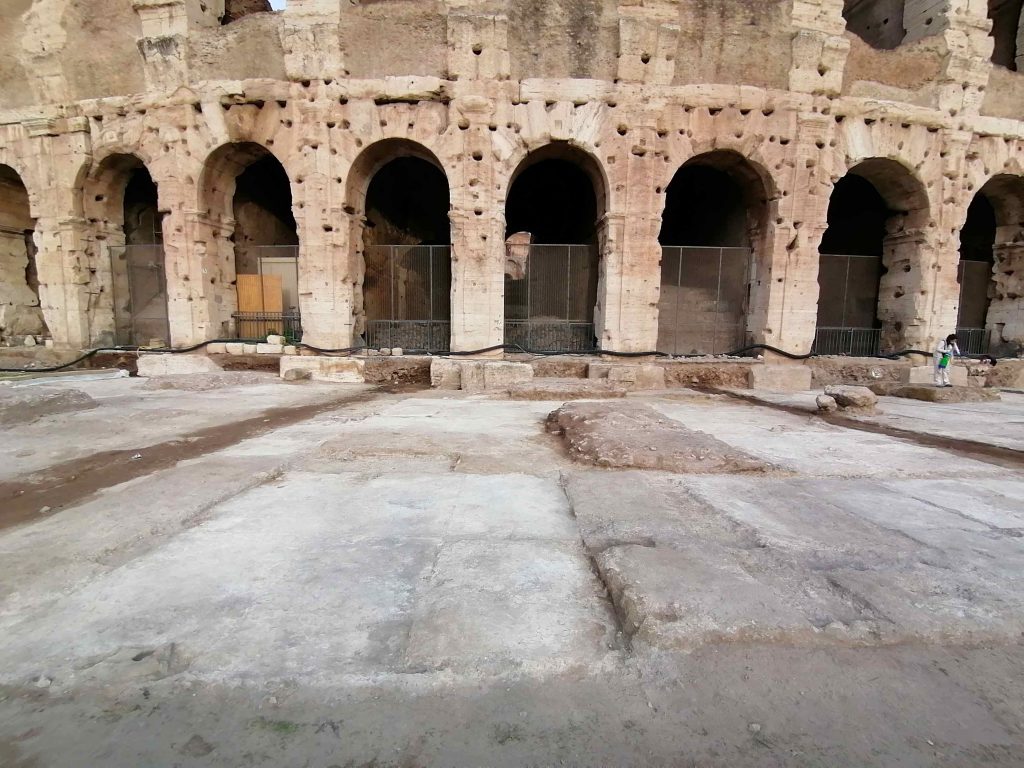
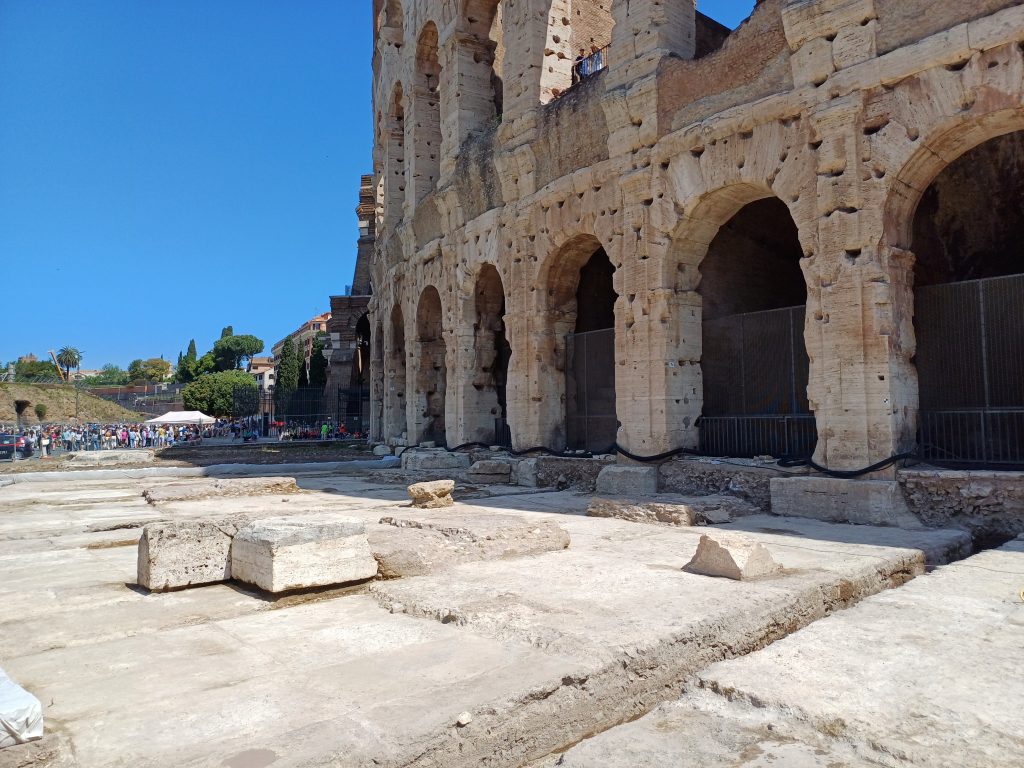
The work covered an area of approximately 1,300 square metres. Excavations uncovered the lime-mortar bedding on which the ancient pavement had been laid. The pavement originally consisted of thick travertine blocks, some of which survived medieval stone-robbing and can still be seen in the excavated area.
The mortar bedding and the other materials brought to light provide valuable evidence of how the Colosseum was built. The rectangular impressions left by the original floor blocks are still visible. The deeper areas correspond to the points where the weight of the pillars rested on the pavement, while the more irregular areas mark the spaces of the circular passageways, known as ambulacra. Preserving these traces means safeguarding important information about the monument’s construction techniques and helping visitors understand its original structure.
-
Restoration Work in Detail
Before the restoration began, the condition of the surfaces was carefully assessed. The mortar showed accumulations of soil and dust, biological growth, small cracks, areas of loss and signs of erosion, particularly in the most fragile parts of the pavement bedding.
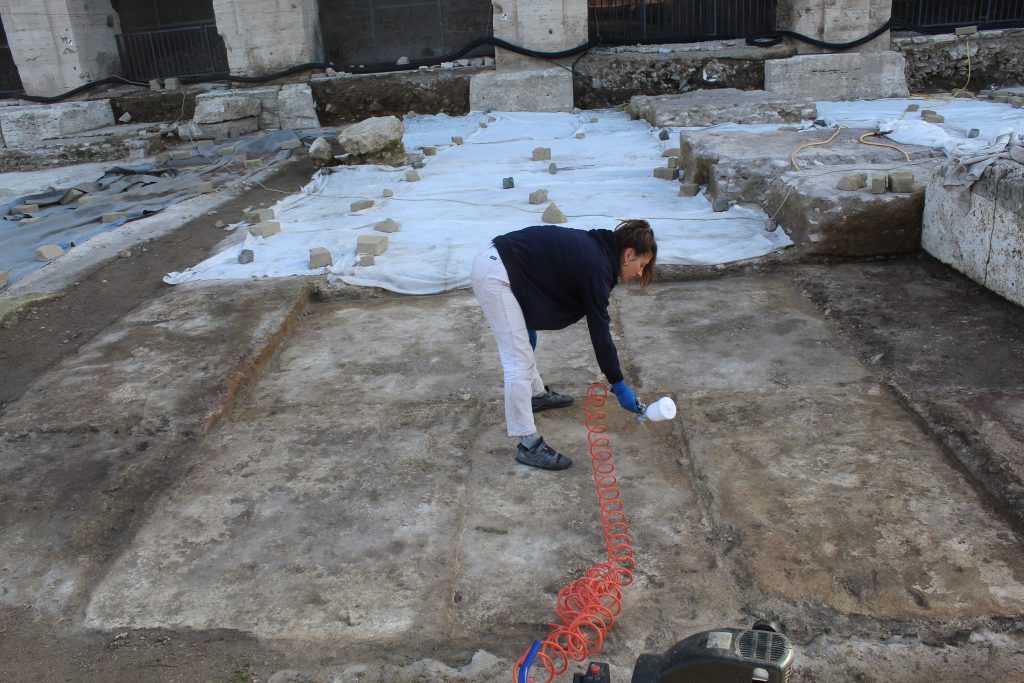
The restoration started with the removal of vegetation and surface deposits. Cleaning was carried out by hand, using brushes and water where necessary, while avoiding aggressive methods.
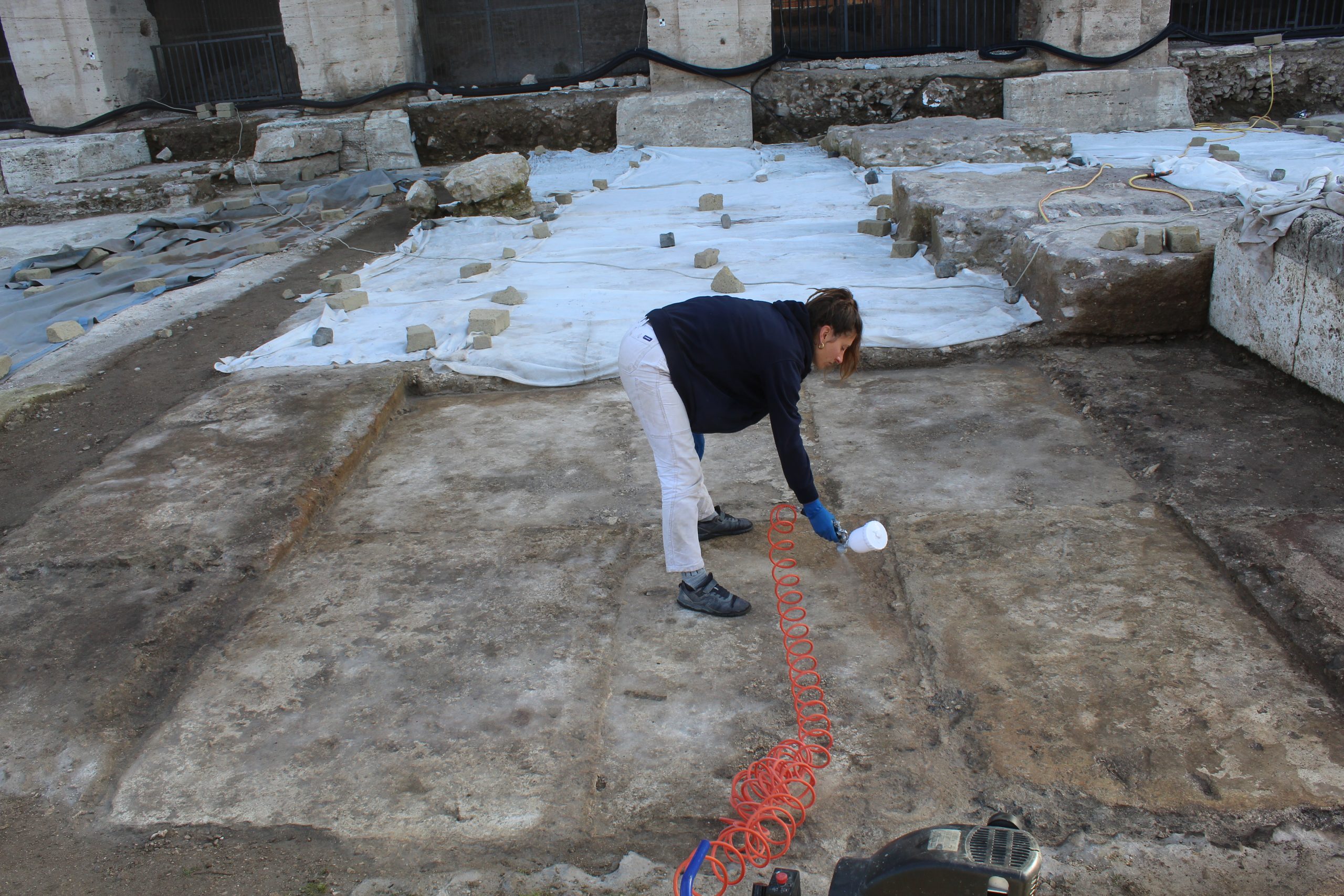
One of the most significant phases was the consolidation of the lime-mortar surfaces. Through a collaboration between the Parco archeologico del Colosseo and the University of L’Aquila, an innovative treatment based on lime nanoparticles was tested. The treatment was designed to strengthen the ancient surfaces using a material similar to that employed two thousand years ago, but formulated with modern technology to ensure effective penetration without altering their appearance.
Particular care was also given to the travertine blocks and the pozzolanic mortar surfaces. Detached fragments were carefully cleaned and returned to their original positions, while gaps and cracks were filled with specially prepared mortars designed to blend with the colour and texture of the ancient materials.
The restoration has brought a section of the ancient square back into view, making both the original materials and the information they preserve about the construction history of the Colosseum easier to understand.